

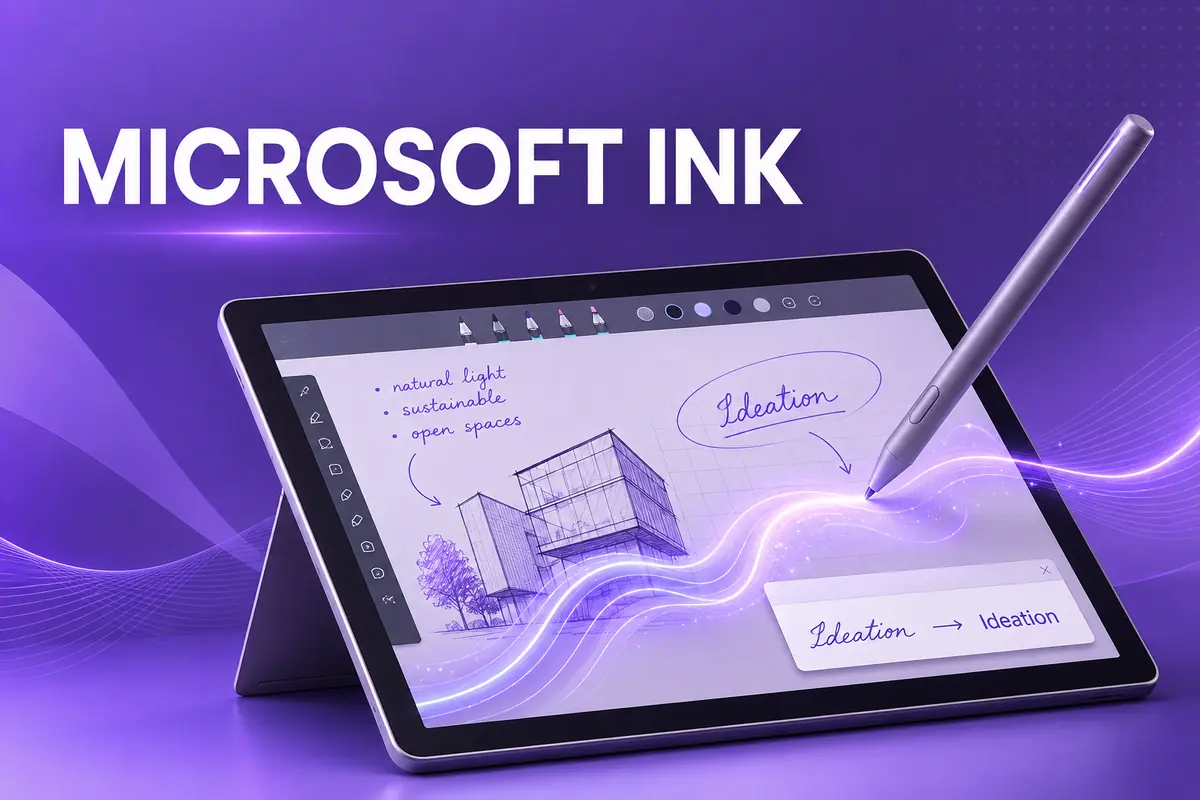
Digital writing has changed how people take notes, explain ideas, review documents, and create artwork. Instead of relying only on a keyboard and mouse, users can write directly on a compatible screen with a digital pen. Microsoft supports this experience through Windows Ink, a collection of features that connects pen input with Windows and supported applications. The keyword https //www.microsoft.com /ink generally refers to people searching for Microsoft’s official information about digital inking, pen settings, handwriting, and related tools.
What Is https //www.microsoft.com /ink?
The phrase https //www.microsoft.com /ink is a spaced version of a Microsoft web address rather than the name of a standalone program. It is commonly associated with Microsoft’s Windows Ink technology and its online guidance for digital pens. Windows Ink provides the software foundation that allows compatible devices to recognize handwritten notes, drawings, pen gestures, pressure, and other forms of stylus input. Its features are available across Windows settings and applications that have built-in inking support.
Understanding Windows Ink
Windows Ink is a Windows input platform designed to make digital writing feel closer to using a real pen on paper. It records the movement of a compatible stylus and displays the resulting strokes on the screen. Depending on the pen, device, and application, it may also detect pressure, tilt, and the position of the pen above the display. These capabilities make it useful for handwriting, sketching, document annotation, diagram creation, and precise on-screen navigation.
Windows Ink Is Not a Single App
One common misunderstanding is that Windows Ink is one application that must be downloaded separately. In reality, it is a set of technologies built into supported versions of Windows. Its tools appear in different places, including the Windows settings menu and Microsoft applications. Some devices also provide access to a pen menu or workspace where users can open compatible apps and commonly used inking features. Available options may differ according to the Windows version, computer model, pen, and installed software.
What Users Can Do With Digital Ink
Windows Ink allows users to write notes, draw illustrations, highlight text, mark screenshots, sign documents, and explain information visually. Students can organize handwritten class notes, while teachers can add comments directly to digital assignments. Designers may use pressure-sensitive strokes for creative work, and office workers can annotate reports during reviews. The value of digital ink comes from combining the natural movement of handwriting with the editing, storage, sharing, and search capabilities of a computer.
Devices Required for the Best Experience
A touchscreen alone does not guarantee complete digital-pen support. The computer’s display must contain suitable digitizer technology and support the protocol used by the pen. Some Windows devices work only with specific styluses, while others support Microsoft Pen Protocol, commonly shortened to MPP. Microsoft notes that certain Surface Pen models may work with non-Surface Windows computers when the device supports a matching MPP version. Users should check both the computer manufacturer’s specifications and the pen’s compatibility information before purchasing one.
Why Pen Compatibility Matters
An incompatible pen may not write at all, or it may provide only limited functions. For example, basic screen interaction could work while pressure sensitivity, shortcut buttons, erasing, or tilt detection remains unavailable. Even pens that look nearly identical may use different communication standards. Checking compatibility in advance prevents users from buying a stylus that cannot access the features they need. Microsoft maintains official compatibility information for Surface Pen models, but other manufacturers may publish separate requirements for their Windows devices.
How to Connect a Digital Pen
Many active digital pens use Bluetooth for shortcut buttons and additional controls. Pairing normally begins by placing the pen in Bluetooth mode, opening Windows Settings, selecting Bluetooth and devices, and adding the pen from the available device list. The exact process can vary between manufacturers. Some pens can write without Bluetooth because their writing signal communicates directly with the screen, while Bluetooth is used only for buttons or special commands. Therefore, a pen may still produce ink even if it is not shown as a Bluetooth device.
Where to Find Pen Settings
People searching for https //www.microsoft.com /ink may be trying to locate pen controls in Windows. On a current Windows 11 device, these options are generally available under Settings > Bluetooth & devices > Pen & Windows Ink. The page can include handwriting preferences, pen-menu settings, and shortcut-button controls. The choices displayed depend on the connected hardware. If an option described in a guide is missing, the device, pen, driver, or Windows edition may not support that particular function.
Customizing the Pen Experience
Windows lets users adjust several pen-related preferences. A user may identify whether they write with the right or left hand, change how handwriting behaves, and decide what a shortcut button should do. Compatible hardware may support separate actions for a single press, double press, or press-and-hold. These shortcuts can provide faster access to note-taking, screen capture, or another selected application. The available settings depend on the pen model, so two Windows users may see different controls.
Pressure Sensitivity and Tilt
Pressure sensitivity allows a pen stroke to change according to how firmly the user presses against the screen. In a drawing application, light pressure may produce a narrow line while stronger pressure produces a thicker one. Tilt recognition can change the angle, width, or shading of a digital brush. These features are particularly valuable to illustrators and designers, but their availability depends on the pen, display digitizer, driver, and application. A pressure-sensitive pen will not necessarily produce varied lines in software that does not support pressure input.
Handwriting and Ink-to-Text Tools
Some Microsoft applications can convert handwriting into typed text. The result depends on legibility, language support, application features, and system configuration. OneNote, for example, offers inking tools for handwritten notes and provides supported methods for converting ink. Microsoft’s Ink to Text Pen also supports selected languages on compatible Windows 11 configurations. Conversion is helpful when users want the freedom of handwriting but still need editable, searchable, or neatly formatted text.
Drawing Shapes and Mathematical Content
Digital ink can offer more than ordinary handwriting. Supported Microsoft applications may recognize rough shapes and convert them into cleaner objects. This is helpful when producing diagrams, flowcharts, classroom material, or presentation notes. Certain tools can also assist with handwritten mathematical expressions. However, these abilities should not be treated as universal Windows functions. Their presence depends on the application, Microsoft 365 version, account, language, and update status. Users should check the relevant application’s documentation when a specific command is unavailable.
Using Ink in OneNote
OneNote is among Microsoft’s most useful applications for digital handwriting. It provides pens, highlighters, erasers, stroke colors, and other drawing controls. Notes can combine handwriting with typed content, pictures, lists, and files on the same page. This flexible layout works well for study notes, brainstorming, meeting records, and lesson planning. Depending on the supported version and setup, users may also convert ink, organize notebook pages, and synchronize notes through a Microsoft account.
Annotating Screenshots and Documents
Digital ink is useful when written feedback communicates an idea faster than a typed explanation. A user can capture part of the screen with the Windows Snipping Tool and mark the image before saving or sharing it. Supported PDF readers and Microsoft 365 applications may also allow handwritten comments or drawings. This workflow is helpful for reviewing designs, correcting assignments, explaining software problems, and pointing out changes in a document without writing a long description.
Benefits for Students and Teachers
For students, digital ink combines familiar handwriting with portable digital storage. They can draw diagrams beside written explanations, highlight important ideas, and reorganize material without carrying several notebooks. Teachers can demonstrate calculations, label illustrations, or provide handwritten feedback. Still, digital notes require sensible organization and backups. A pen-enabled computer does not automatically improve learning; its value depends on how clearly notes are structured, stored, reviewed, and synchronized.
Benefits for Creative Professionals
Illustrators, architects, photographers, and designers can use Windows Ink for sketching and detailed adjustments. Pressure and tilt can make brushwork more expressive, while direct screen input may provide better control than a mouse. The final experience depends heavily on display quality, pen latency, software support, and color accuracy. Creative professionals should examine the complete hardware and software setup rather than choosing a computer solely because its product description mentions pen input.
Benefits for Office Work
In professional settings, digital pens can improve document reviews, brainstorming sessions, presentations, and remote collaboration. A manager may mark corrections on a report, while a presenter can draw attention to information during a meeting. Teams can use supported whiteboard applications to develop ideas visually. However, organizations should also consider file permissions, cloud-storage policies, and device security. Handwritten information stored digitally must be protected in the same way as typed business records.
How Developers Use Windows Ink
Windows Ink also provides tools for software developers. Microsoft documentation explains how developers can add an ink canvas, drawing toolbar, handwriting recognition, shape recognition, and ink-saving functions to supported Windows applications. These controls help developers create note-taking, educational, design, and annotation software without building every input feature from the beginning. Developers must still test their apps across different pens, displays, input methods, and Windows versions to maintain reliable behavior.
Common Problems With Windows Ink
Users may encounter a pen that does not write, connects inconsistently, produces inaccurate strokes, or loses access to shortcut buttons. Possible causes include a low battery, an incompatible pen, outdated drivers, pending Windows updates, incorrect Bluetooth pairing, or an application-specific problem. Screen protectors and damaged pen tips can also affect writing quality. Before changing advanced settings, users should confirm compatibility, restart the device, charge or replace the battery, and test the pen in another supported application.
Basic Troubleshooting Steps
When digital ink stops working, begin by restarting the computer and checking for Windows, driver, and firmware updates. Surface owners can use the Surface app to review device health and update status. Next, examine the pen’s battery level, charging method, tip, and Bluetooth connection. Remove and pair the pen again if necessary. If it works in one program but not another, the problem is probably related to the application rather than the pen itself. Microsoft provides separate official guides for using a pen with Windows and troubleshooting Surface Pen.
Privacy and Security Considerations
Handwritten notes can contain private information, signatures, account details, or confidential business material. Users should protect the device with a secure sign-in method and review where each application stores or synchronizes ink. Cloud-connected notebooks may upload content to an online account, while other applications keep files locally. Before sharing a marked screenshot or document, users should inspect the full image for exposed names, notifications, email addresses, or background information that was not intended for others.
Is the Microsoft Ink Information Free?
Reading Microsoft’s Windows Ink guidance does not require a payment, and the underlying pen functionality is part of supported Windows installations. Costs may arise from purchasing a compatible computer, digital pen, replacement tips, batteries, applications, or a Microsoft 365 subscription. Some inking functions are built into free Windows tools, while advanced features may be tied to particular software or subscription plans. The page suggested by https //www.microsoft.com /ink should therefore be understood as product information, not as a separate paid service.
Important Note About Windows Versions
The design and location of Windows Ink features have changed across Windows releases. An older article or video may show a Windows Ink Workspace that looks different from the current interface. Microsoft also ended general support for Windows 10 on October 14, 2025, and now recommends moving to Windows 11. Users following old instructions should check the publication date and confirm that the steps match their operating system before changing settings or installing additional software.
Conclusion
The search phrase https //www.microsoft.com /ink leads to a broader subject than a single webpage or downloadable application. Windows Ink is Microsoft’s digital-writing platform for handwriting, drawing, annotation, and pen-based interaction on compatible Windows devices. Its usefulness depends on the relationship between the display, stylus, operating system, drivers, and application. By checking compatibility and learning the available settings, users can turn a supported Windows computer into a practical tool for study, creative work, communication, and everyday productivity.
FAQs
What does https //www.microsoft.com /ink mean?
It is a spaced URL-style search phrase generally used to find Microsoft information about Windows Ink, digital pens, handwriting, and related features.
Do I need a Surface device to use Windows Ink?
No. Other Windows computers can support digital ink, but the screen and pen must use compatible technology or a matching pen protocol.
Can Windows Ink convert handwriting into text?
Yes, supported Microsoft applications can convert certain handwritten content into typed text. Availability varies by app, language, Windows version, and device.
Why is my digital pen not writing?
Common reasons include an empty battery, an incompatible pen, outdated drivers, a damaged tip, connection problems, or an issue with the selected application.
Is Windows Ink free to use?
Core Windows pen support is included with compatible Windows devices, although the pen, computer, subscriptions, or specialist applications may cost extra.