

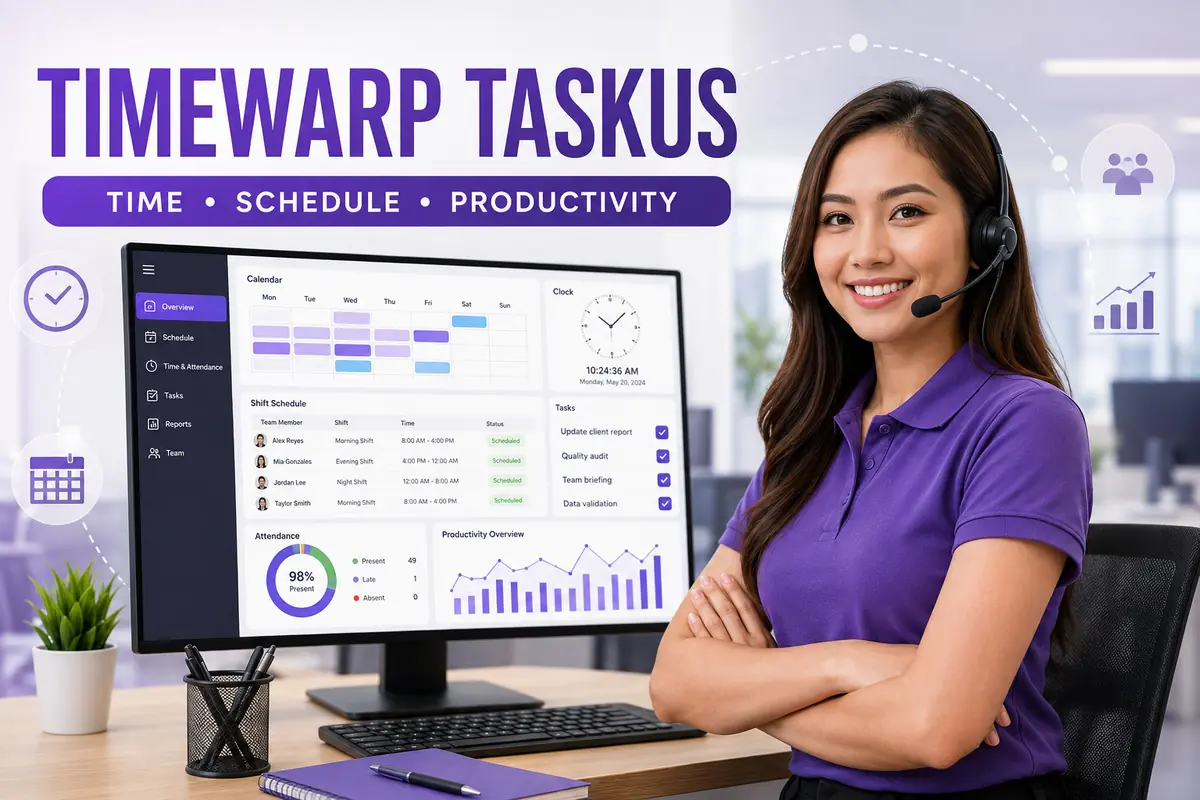
Managing working hours across large customer support teams requires more than a basic attendance sheet. Employees may work different shifts, handle changing schedules, take planned breaks, or operate from different locations. Timewarp TaskUs is an internal portal associated with TaskUs that helps authorized team members access work-related time and scheduling functions in a more organized way.
The portal should not be confused with a public productivity application that anyone can download and use. It appears to be a protected workplace system intended for TaskUs employees and other approved users. The official login page requires authentication through PingID, while technical concerns are directed to the company’s internal support channel. This confirms that access is controlled rather than publicly available.
What Is TaskUs?
TaskUs is a digital services company that provides customer experience, trust and safety, artificial intelligence and data services, financial crime and compliance support, and other specialized business solutions. It operates across numerous countries and supports companies that need trained teams combined with modern technology.
Because its workforce handles complex operations across regions, organized scheduling and attendance management are essential. A centralized time-management portal can help employees follow assigned working hours while allowing managers to maintain adequate staffing. TaskUs describes its broader business model as a combination of specialized talent and intelligent technology designed to improve customer support and business operations. More information about the company is available on the official TaskUs website.
What Timewarp TaskUs Is Used For
The main purpose of Timewarp TaskUs is to give authorized employees a central place for managing or reviewing time-related work information. Depending on a person’s role, location, account, and assigned campaign, the available options may include attendance records, shift details, work schedules, breaks, or other workforce information.
Not every employee will necessarily see the same dashboard or functions. Access permissions are often determined by department and responsibility. A frontline teammate, supervisor, workforce specialist, and administrator may each have a different view. Therefore, unofficial guides that present one universal set of features should be treated carefully because the actual interface may vary between accounts.
Why Accurate Time Records Matter
Accurate attendance information affects several parts of the workplace. It helps managers understand whether enough employees are available during busy periods. It can also support the correct handling of working hours, approved leave, schedule changes, and payroll-related records when those processes are connected to the organization’s wider systems.
For employees, accurate records create greater clarity. A teammate can check the assigned shift instead of depending on an informal message or an outdated schedule. If a record appears incorrect, reporting it promptly gives the appropriate department a better chance to investigate before it affects another process. The portal supports recordkeeping, but employees still need to review their information responsibly.
How Scheduling Supports Customer Service
Customer support demand is rarely equal throughout the day. A business might receive a high volume of calls in the morning, a surge in live-chat requests after a product update, or more emails during a seasonal sale. Workforce teams use schedules to place enough trained employees where customer demand is expected.
An organized scheduling system helps connect employee availability with operational requirements. When shifts, breaks, and attendance are recorded consistently, managers can see whether staffing plans are being followed. This visibility can reduce avoidable gaps and help maintain service levels. However, the portal itself does not replace workforce planning. Forecasting, management decisions, training, and employee communication remain equally important.
How Employees Access the Portal
Authorized users can reach the regional Time Warp sign-in page provided by TaskUs. The visible official portal instructs users to sign in with PingID, an authentication service commonly used by organizations to protect internal systems. Employees should use only the web address supplied through official onboarding material, their manager, or the TaskUs IT team.
Users should not enter company credentials into a third-party website claiming to provide easier access. Search results can contain unofficial pages that imitate login guides or make unsupported claims about the platform. The safest approach is to open a verified company bookmark or type the official address carefully. Employees should also avoid saving passwords on shared computers.
Signing In Securely
The login process may vary according to location and company security rules, but users should expect to verify their identity through the approved authentication method. PingID may require a registered device or another verification step before access is granted. This additional check protects workplace records even if a password becomes exposed.
Employees should never share a one-time code, authentication request, or password with another person. Unexpected approval notifications must be rejected and reported because they may indicate that someone else is attempting to access the account. The official portal directs security-related concerns to a dedicated company resource, showing that suspicious activity should be treated separately from ordinary technical problems.
Common Login Problems
A failed sign-in does not always mean the portal is unavailable. The user may be opening an incorrect regional page, entering the wrong company credentials, experiencing a connection issue, or using a browser with outdated session data. PingID may also fail when the enrolled device is unavailable or its registration needs attention.
Before contacting support, employees can confirm that their internet connection is stable, reopen the approved URL, and restart the browser. They should follow only troubleshooting steps allowed by company policy. Repeatedly guessing a password can lead to an account lock, so it is better to use the approved recovery process or request assistance rather than continuing unsuccessful attempts.
Getting Official Technical Support
The official Time Warp login page tells users to file a ticket through SNOW for portal-related concerns. SNOW commonly refers to an internal ServiceNow support process. A well-prepared ticket should explain the problem clearly, mention when it began, and include the wording of any error message. Employees should add screenshots only when company policy permits them to do so.
Sensitive details should never be placed unnecessarily in a support ticket. Passwords, one-time authentication codes, customer information, and confidential account data should not be included. Providing a concise description, device or browser details, and the steps already attempted is normally more useful than sending private information.
Correcting Attendance or Schedule Issues
If an employee notices an incorrect shift, missing attendance entry, or unexpected schedule change, the matter should be raised through the approved internal process. Editing options may depend on permissions, and some corrections may require a supervisor, workforce team, human resources representative, or payroll team to review the record.
Employees should report discrepancies as early as possible and keep relevant evidence permitted under workplace rules. This might include the date, scheduled shift, actual working time, and any approved change. They should not assume that submitting a correction guarantees approval. The responsible team may compare the request with system records and management authorization before updating it.
Benefits for Employees
Timewarp TaskUs can give employees a clearer view of work-related time information. Knowing when a shift begins, when a break is scheduled, or whether an attendance record has been captured can reduce confusion. Centralized information is particularly valuable when teams operate across different schedules or work arrangements.
The system can also make workplace conversations more specific. Instead of saying that a schedule “looks wrong,” an employee can identify the relevant date and entry when contacting the appropriate team. Still, the portal is only one part of employee communication. Managers and support departments remain responsible for explaining policies and resolving issues that cannot be handled through the dashboard.
Benefits for Workforce Management
For workforce and operations teams, consistent time records can improve visibility into staffing. Managers can compare scheduled coverage with actual attendance and identify gaps that may affect customer queues. Reliable records may also support reporting, planning, and the review of schedule adherence.
Data must be interpreted in context, however. A late or missing entry does not automatically explain why it occurred. Technical failures, approved changes, emergencies, and administrative errors can all affect a record. Fair management requires verification and communication rather than relying on a single number without considering the circumstances behind it.
Privacy and Responsible Use
Workforce portals may contain personal and operational information, so employees should access them carefully. Company-owned or approved devices are generally safer than public computers. Users should sign out after completing their work and avoid displaying schedules or employee information where unauthorized people can view it.
Screenshots from internal systems should not be posted on social media or uploaded to public troubleshooting forums. Even an image that appears harmless may reveal employee identifiers, internal links, working patterns, or confidential business information. Questions should be handled through approved TaskUs channels, especially when the issue involves account access or workplace records.
Important Facts to Remember
Timewarp TaskUs is best understood as a protected employee-facing portal rather than a general task-management product for outside businesses. Publicly visible evidence confirms an official login page, PingID authentication, and an internal ticket route for technical concerns. Detailed functions beyond what an employee sees in an authorized account should not be presented as confirmed facts without official documentation.
Employees should rely on their onboarding instructions, manager, human resources team, workforce department, or IT support service for account-specific guidance. Regional procedures and available features may change, so an unofficial online tutorial should never override current internal instructions.
Final Thoughts
Timewarp TaskUs helps bring structure to employee time, attendance, and schedule-related processes within a demanding operational environment. Its value comes from giving authorized users controlled access to relevant workforce information and a defined route for reporting problems.
Using the portal effectively requires more than knowing where to sign in. Employees should protect their credentials, check records regularly, report discrepancies quickly, and follow company procedures. When workers and management teams both maintain accurate information, scheduling becomes clearer and operational decisions can be made with greater confidence.
FAQs
Is Timewarp available to the public?
No. It is an internal workplace portal intended for authorized TaskUs users rather than a public productivity application.
How do employees sign in?
The official portal asks users to authenticate with PingID. Employees should use the approved regional link given by TaskUs.
What should I do if the portal does not open?
Check the approved URL and connection first. If the issue continues, follow the official process and file a SNOW support ticket.
Can an employee correct a missing time entry?
The correction process depends on account permissions and internal policy. Contact the appropriate supervisor, workforce, HR, or payroll team.
Is it safe to share a portal screenshot online?
No. Screenshots may expose employee or company information. Share details only through authorized internal support channels.
More details : Hazevecad04 Version on PC: A Safe Guide for CAD Users