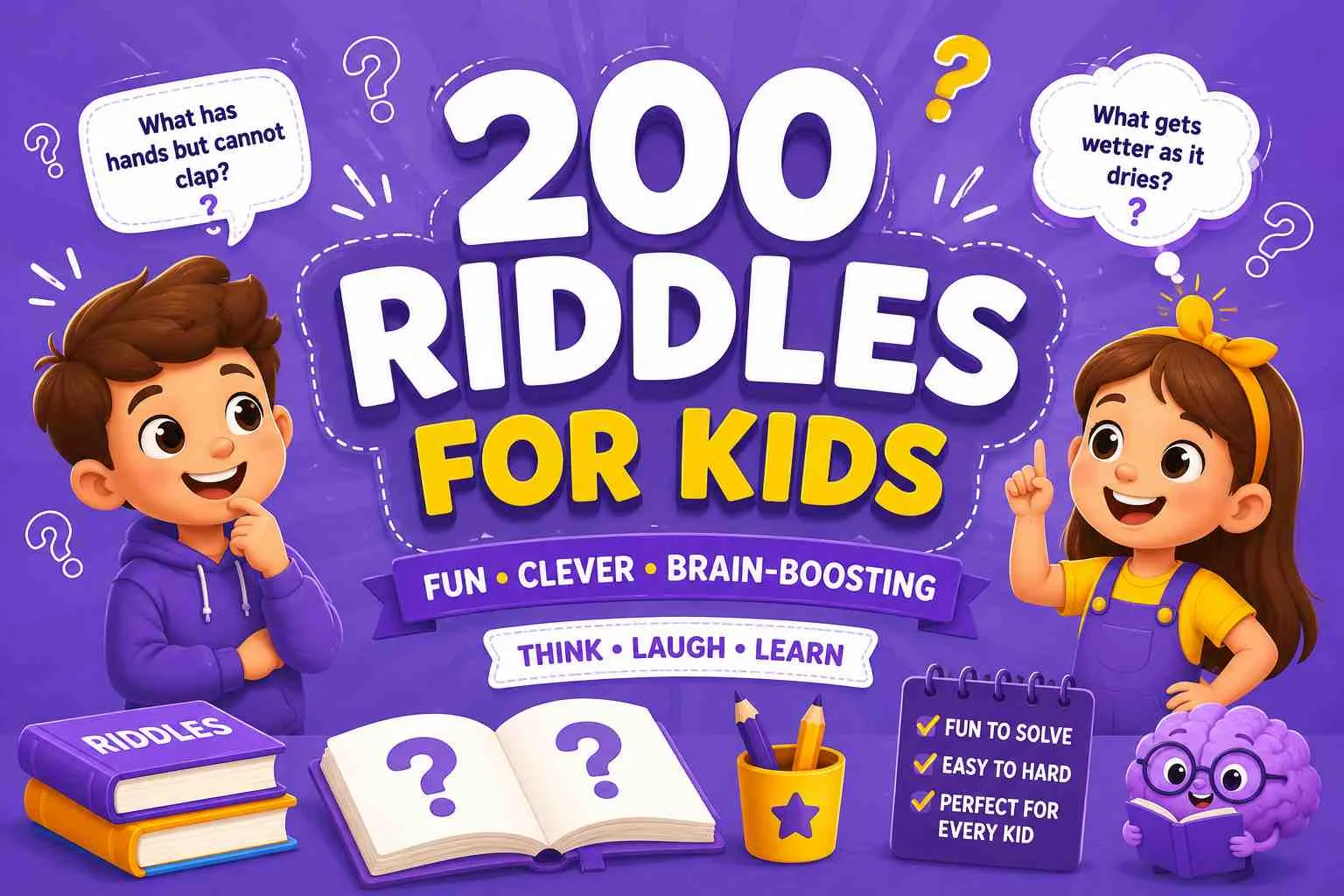
Kids love challenges that make them think, laugh, and learn at the same time. That’s exactly why riddles for kids remain one of the most enjoyable educational activities for children of all ages. A good riddle sparks curiosity, improves critical thinking, boosts creativity, and creates memorable moments with family and friends.
Whether you’re a parent, teacher, babysitter, or simply someone looking for fun brain teasers, this collection of 200 riddles for kids will keep young minds engaged for hours. From easy riddles to clever puzzles, you’ll find something for every age group.
Let’s dive into the world of imagination, laughter, and learning!
Why Riddles Are Great for Kids
Riddles are much more than simple jokes. They help children:
- Improve problem-solving skills
- Develop logical thinking
- Increase vocabulary
- Encourage creativity
- Build confidence
- Enhance memory
- Create family bonding moments
The best part? Kids learn while having fun.
200 Best Riddles for Kids With Answers
Easy Riddles for Kids
- What has hands but cannot clap? A clock
- What has one eye but cannot see? A needle
- What gets wetter as it dries? A towel
- What has keys but can’t open locks? A piano
- What has a face and two hands but no arms or legs? A clock
- What goes up but never comes down? Your age
- What has many teeth but cannot bite? A comb
- What comes down but never goes up? Rain
- What can travel around the world while staying in one spot? A stamp
- What is full of holes but still holds water? A sponge
- What has four wheels and flies? A garbage truck
- What begins with T and ends with T and has tea inside? A teapot
- What kind of room has no doors or windows? A mushroom
- What has a neck but no head? A bottle
- What can you catch but not throw? A cold
- What has legs but doesn’t walk? A table
- What belongs to you but others use it more? Your name
- What runs but never walks? Water
- What can you hear but not touch? A sound
- What is always in front of you but can’t be seen? The future
- What has a thumb and four fingers but isn’t alive? A glove
- What comes once in a minute, twice in a moment? The letter M
- What has an end but no beginning? A stick
- What goes through cities and fields but never moves? A road
- What has words but never speaks? A book
- What can fill a room but takes no space? Light
- What gets bigger the more you take away? A hole
- What is easy to lift but hard to throw? A feather
- What has ears but cannot hear? Corn
- What is orange and sounds like a parrot? A carrot
- What kind of tree can you carry? A palm
- What has a ring but no finger? A telephone
- What can jump higher than a house? Anything—houses can’t jump
- What has one head, one foot, and four legs? A bed
- What comes before thunder? Lightning
- What has a tail but no body? A coin
- What has branches but no fruit? A bank
- What can be broken without touching it? A promise
- What can you hold without touching? Your breath
- What is black when clean and white when dirty? A chalkboard
- What kind of coat is always wet? A coat of paint
- What goes up when rain comes down? An umbrella
- What has feet but no legs? A ruler
- What can you serve but never eat? A tennis ball
- What is tall when young and short when old? A candle
- What can run but never gets tired? A river
- What is always coming but never arrives? Tomorrow
- What has a bed but never sleeps? A river
- What gets sharper the more you use it? Your brain
- What is yours but everyone else sees first? Your face
Funny Riddles for Kids
- Why did the teddy bear skip dessert? It was stuffed
- Why can’t a bicycle stand alone? It’s two-tired
- Why did the banana go to the doctor? It wasn’t peeling well
- What kind of lion never roars? A dandelion
- Why was six afraid of seven? Because seven ate nine
- What do you call a sleeping bull? A bulldozer
- Why did the cookie go to the hospital? It felt crummy
- What do clouds wear under their clothes? Thunderwear
- What kind of key opens a banana? A monkey
- What do you call a bear with no teeth? A gummy bear
- What did one wall say to the other? I’ll meet you at the corner
- Why did the student eat homework? Teacher said it was a piece of cake
- Why did the scarecrow win an award? Outstanding in his field
- What do you call cheese that isn’t yours? Nacho cheese
- Why was the math book sad? Too many problems
- What do elves learn in school? The elf-abet
- Why did the tomato blush? It saw the salad dressing
- What kind of music do balloons hate? Pop music
- Why did the frog take the bus? His car got toad away
- What do you call a fish wearing a bowtie? Sofishticated
- What did the pencil say? You’re drawing attention
- What do you call an alligator detective? An investigator
- What do cows read? Cattle-logs
- Why was the broom late? It swept in
- What kind of dog loves magic? A labracadabrador
- What do you call a funny mountain? Hill-arious
- Why did the bee get good grades? It was buzzy
- Why don’t eggs tell jokes? They’d crack up
- What do ghosts eat for dessert? Ice scream
- What is a pirate’s favorite letter? R
- Why did the duck become a detective? To quack the case
- What do you call a pig that knows karate? Pork chop
- Why are fish smart? They live in schools
- Why don’t skeletons fight? No guts
- What kind of shoes do ninjas wear? Sneakers
- What do cats eat for breakfast? Mice Krispies
- What do you call a dinosaur that sleeps? A dino-snore
- Why did the pencil break? Too much pressure
- What kind of bird works at construction sites? A crane
- Why did the computer sneeze? It had a virus
- What do you call a cold puppy? A chili dog
- Why was the belt arrested? Holding up pants
- What kind of candy is never on time? Choco-late
- What do robots eat? Microchips
- What is a rabbit’s favorite dance? Hip-hop
- Why did the orange stop? It ran out of juice
- What kind of cup can’t hold water? A cupcake
- Why do ducks make great comedians? Good quacks
- What do you call a snowman in summer? A puddle
- Why did the grape stop? It ran out of juice
Clever Riddles for Kids
- What has cities but no houses? A map
- What can you keep after giving it away? Your word
- What flies without wings? Time
- What has 13 hearts? A deck of cards
- What can be cracked, made, told, and played? A joke
- What comes at night without being called? Stars
- What can never be put in a saucepan? Its lid
- What begins with E and contains one letter? Envelope
- What gets lost every time you stand up? Your lap
- What has rivers but no water? A map
- What can speak all languages? An echo
- What gets more useful when broken? An egg
- What starts with P and ends with E? A post office
- What can run around a yard without moving? A fence
- What goes through glass without breaking it? Light
- What has no life but can die? A battery
- What has a bottom at the top? Your legs
- What kind of band never plays music? Rubber band
- What can you see once in a year? The letter E
- What comes after a storm? A rainbow
121-150. More classic brain teasers: shadow, mirror, pencil, kite, moon, star, book, leaf, shoe, backpack, candle, river, bridge, balloon, snowflake, cloud, butterfly, magnet, ladder, puzzle, rocket, helmet, camera, compass, whistle, drum, telescope, notebook, lantern, treasure.
Brain-Boosting Riddles for Kids
- What has four legs in the morning, two at noon, three at night? A human
- What is always running but never tired? Time
- What can you break by saying its name? Silence
- What is lighter than a feather but impossible to hold long? Your breath
- What grows when shared? Happiness
- What can open doors without keys? Knowledge
- What has no voice but tells stories? A book
- What shines without fire? The moon
- What gets stronger with practice? Skill
- What never asks questions but gets answers? A doorbell
- What is the best thing to put into a pie? Your teeth
- What can make you smile without touching you? A joke
- What has a bark but no bite? A tree
- What can fly without feathers? An airplane
- What can grow without water? Your imagination
- What has pages but isn’t a tree? A book
- What is always moving yet stays in place? A clock’s hands
- What is invisible but can be felt? The wind
- What gets brighter the more it’s used? Knowledge
- What has no wings but can soar? Dreams
- What can connect people worldwide? Friendship
- What is stronger than fear? Courage
- What can light a room and a mind? An idea
- What grows when you learn? Wisdom
- What is free but priceless? Love
- What can travel through generations? Stories
- What never gets old when shared? Kindness
- What can turn mistakes into lessons? Experience
- What helps you see the future? Planning
- What is a treasure no one can steal? Knowledge
- What makes hard things easier? Practice
- What makes a team stronger? Cooperation
- What helps dreams come true? Effort
- What grows with patience? Success
- What is the key to improvement? Learning
- What opens every classroom door? Curiosity
- What can be small but powerful? An idea
- What spreads without wings? Inspiration
- What improves when shared? Knowledge
- What makes every day brighter? Gratitude
- What is a friend to every learner? Books
- What can turn challenges into opportunities? Positive thinking
- What helps kids become leaders? Confidence
- What can never be measured fully? Potential
- What creates new possibilities? Creativity
- What builds strong character? Honesty
- What helps people grow? Learning
- What makes success possible? Persistence
- What powers every invention? Imagination
- What is every child’s superpower? Curiosity
Meaning Behind Some Popular Riddles
“What gets wetter as it dries?”
Answer: A towel
Meaning: Sometimes the answer isn’t what seems obvious. This riddle teaches children to think differently and look at problems from new perspectives.
“What goes up but never comes down?”
Answer: Your age
Meaning: Time always moves forward. It’s a simple way to help kids understand growth and life.
“What gets bigger the more you take away?”
Answer: A hole
Meaning: Logic matters more than assumptions. Kids learn creative problem-solving.
“What can be broken without touching it?”
Answer: A promise
Meaning: This riddle teaches an important lesson about trust, honesty, and responsibility.
Who Can Use These Riddles?
These riddles for kids are perfect for:
Parents
- Family game nights
- Road trips
- Dinner conversations
Teachers
- Classroom activities
- Brain breaks
- Learning exercises
Friends
- Fun challenges
- Party games
- School competitions
Social Media Users
- Instagram captions
- Facebook posts
- WhatsApp groups
- TikTok content
Motivational Speakers and Youth Leaders
- Icebreakers
- Team-building sessions
- Confidence-building activities
Benefits of Using Riddles Daily
Using riddles regularly can:
- Improve concentration
- Enhance communication skills
- Increase creativity
- Strengthen memory
- Build confidence
- Encourage teamwork
- Reduce screen time
Even spending just 10 minutes a day with riddles can make learning more exciting.
FAQs
What age is best for kids’ riddles?
Most riddles are suitable for children aged 5–12, though older kids enjoy challenging riddles too.
Do riddles help brain development?
Yes. Riddles improve critical thinking, logic, memory, and creativity.
Can teachers use riddles in classrooms?
Absolutely. Riddles are excellent educational tools for engagement and learning.
Are riddles good for family activities?
Yes. They encourage communication, laughter, and bonding.
How often should kids solve riddles?
A few riddles daily can help develop thinking skills while keeping learning fun.
Conclusion
Riddles are timeless treasures that entertain, educate, and inspire children. Whether you’re looking for a fun classroom activity, a family game night idea, or creative content for social media, these 200 riddles for kids offer endless opportunities for laughter and learning.
Keep challenging young minds, encouraging curiosity, and making education exciting through fun brain teasers and puzzles.
For more inspiring content, fun collections, motivational quotes, and engaging articles, visit QuotesMagzine.com and discover something new every day!